

Managing a large-scale commercial or public sector property is no longer merely a logistical challenge; in the current regulatory climate, it is a significant operational liability. Outdated perceptions of facilities management as a simple combination of cleaning and security are not just reductive—they are dangerous. Modern property management has transformed into a high-stakes integration of advanced technology and rigorous statutory compliance.
Across the United Kingdom, Delta Force Group (DFG) has established the strategic blueprint for this evolution. By replacing fragmented, siloed services with a unified, nationwide model, organisations are able to leverage facilities management as a critical driver of safety, efficiency, and long-term asset protection.
The End of Vendor Fatigue: Why Integration is the Ultimate Efficiency Hack
Traditional property management is often plagued by "vendor fatigue," where leadership is forced to manage a chaotic web of disparate contracts for electrical work, plumbing, cleaning, and security. Integrated Facilities Management (IFM) eliminates this friction by providing a comprehensive end-to-end solution.
By combining Hard FM—the technical physical assets—with Soft Services such as reception, grounds maintenance, and waste management, a single provider can orchestrate a cohesive strategy across an entire portfolio. This removes administrative bottlenecks and ensures a unified performance standard.
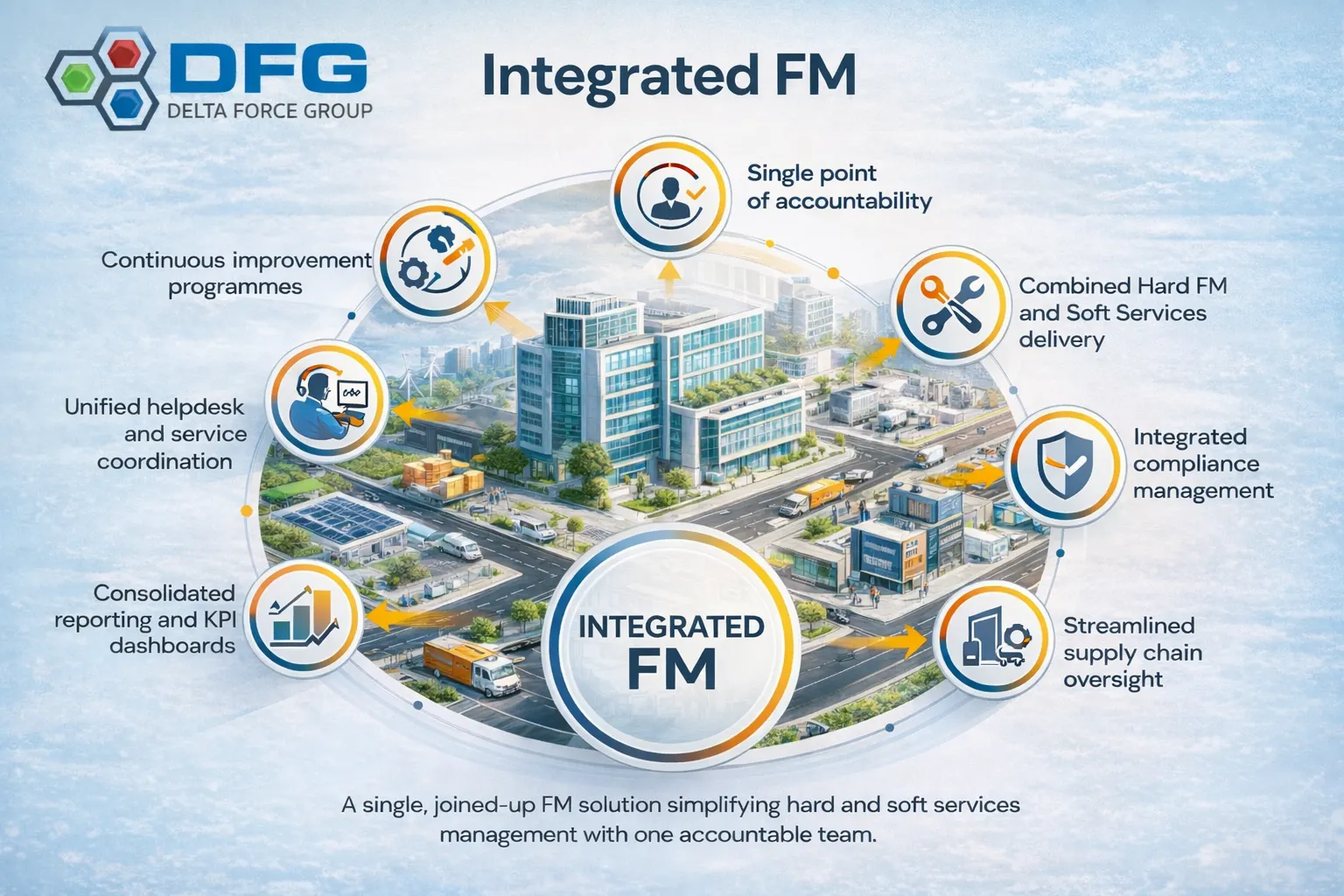
"Delta Force Group delivers integrated facilities management across Hard FM and Soft Services. Secure, compliant, and KPI-led service delivery tailored to your sites across the UK."
Statutory Compliance: The Invisible Shield Keeping Your Organisation Legal
While Soft Services are the visible face of a facility, Hard FM is the invisible engine of safety and legality. This encompasses mechanical and electrical maintenance, statutory compliance, and building fabric services—the maintenance of roofs, walls, and floors that are often the most neglected yet structural components of an asset.
The strategic shift from "reactive repairs" to "planned preventive maintenance" (PPM) is the hallmark of a sophisticated operation. Maintaining compliance is not about fixing a system when it fails; it is a 24/7 commitment to meeting legal safety standards.

Water Compliance: Managing the Hidden Dangers of Legionella
One of the most critical, yet frequently overlooked, aspects of modern facilities management is water hygiene. While occupants take water safety for granted, the stakes are exceptionally high for sectors like Healthcare, Education, and Industrial Logistics.
A compliance-first delivery model demands specialised Water Compliance services to prevent the growth of Legionella and other pathogens. This includes:
- Rigorous Legionella risk assessments
- Consistent water sampling and analysis
- Thermostatic Mixing Valve (TMV) servicing
- Chemical dosing and full water hygiene management
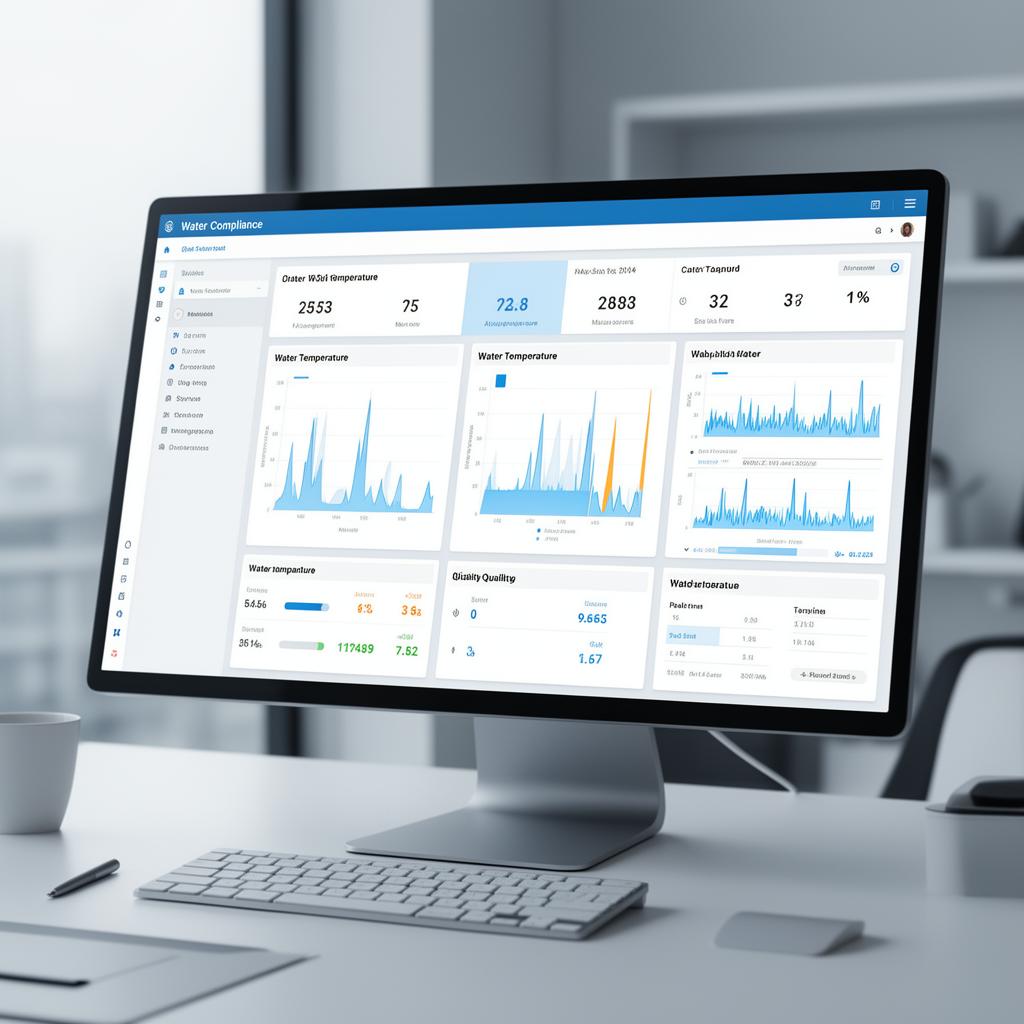
For any organisation operating across the Public Sector or Retail, managing these hidden dangers is an ethical and legal necessity, ensuring the facility meets stringent public health requirements.
The Ethics of Maintenance: De-Risking Lone Workers and Vacant Assets
Strategic FM extends beyond the typical workday to address the human and logistical vulnerabilities of the modern built environment. This is most evident in the integration of Lone Worker Safety and Vacant Property Management.
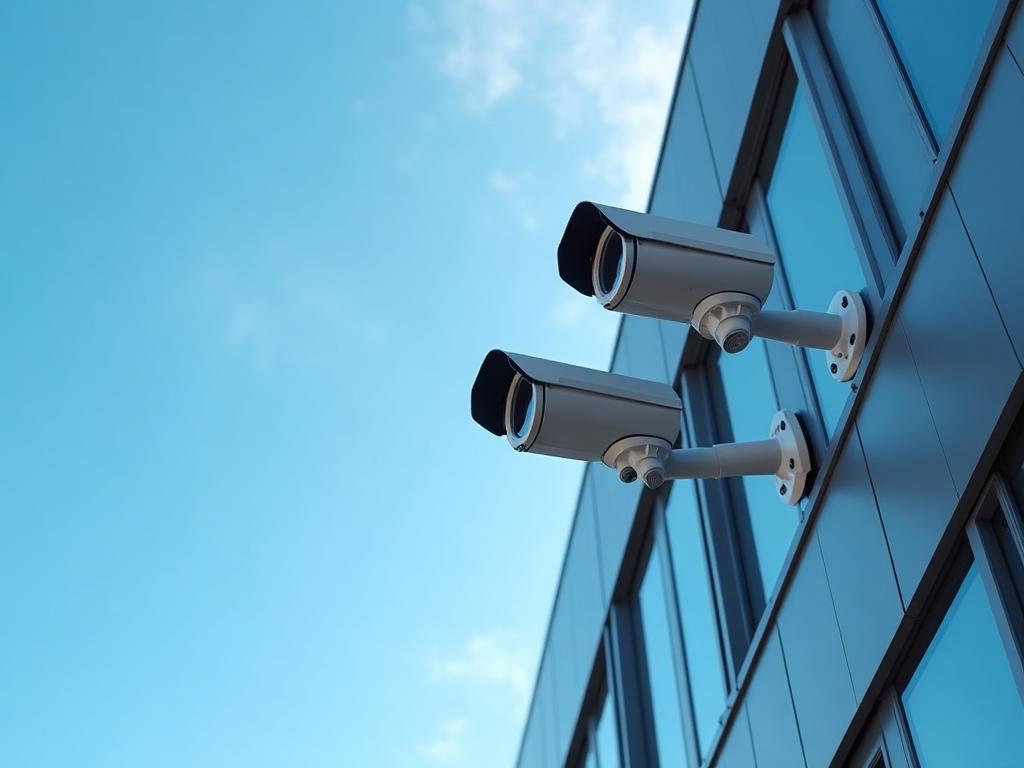
From a human capital perspective, integration allows for the monitoring of isolated individuals through technology-led safety solutions. Logistically, the focus shifts to protecting "void" or unoccupied assets from clearance to security. By utilising 24/7 remote monitoring—including CCTV surveillance, intruder alarms, and electronic access control—organisations can ensure that even temporarily empty buildings are protected from decay or unauthorised access.
The Data-Driven Facility: Moving from 'Done' to 'Documented'
In a high-stakes environment, it is no longer enough to perform a task; that task must be measured, documented, and verified against rigorous benchmarks. Modern facilities management is defined by KPI-driven performance management, where data-driven outcomes replace empty promises of quality.
This commitment to excellence is anchored in external verification. High-tier FM providers utilise industry-standard accreditations to mitigate supply chain risk for their clients. Constructionline Gold is not merely a badge; it is a rigorous pre-qualification that demonstrates a firm's financial and operational stability. Similarly, being SIA approved or Safe Contractor accredited provides the external rigour required by COOs and Facilities Managers.
"Our approach combines experienced personnel, advanced technology integration, and robust KPI-driven performance management to deliver measurable outcomes for our clients."
Conclusion: The Future of the Built Environment
The industry has moved decisively away from basic "fire-fighting" maintenance toward a sophisticated, integrated strategy. With nationwide coverage and a commitment to compliance-first delivery, the scale of modern FM ensures that every component of a property is optimised.
As buildings become smarter and regulations tighten, no organisation can afford to manage their facilities in silos. The modern built environment requires a holistic view, managing everything from the mechanical systems in the walls to the security of the vacant asset across the country.
This leads to a final, vital question for every property owner: Is your facility merely standing, or is it actively being managed to its highest potential of safety and efficiency?
Ready to Transform Your Facilities Management?
Discover how Delta Force Group's integrated approach can optimise your property operations.