
Choosing the right key holding service in the UK is one of those decisions that looks simple on a quote sheet — and gets very expensive when it goes wrong. A missed alarm at 3am, a member of staff sent to a break-in alone, a lost key returned to a public address: these are the everyday outcomes of using the wrong key holding company.
This 2026 buyer's guide breaks down what a real key holding service should include, what UK standards to insist on, what fair pricing looks like, and the questions to ask before you sign anything. Delta Force Group provides nationwide key holding security backed by a 24/7 control room and live postcode coverage.
Key Takeaways
- ✓A real key holding service is far more than storing a key — it includes attendance, response, reporting and insurance-grade evidence.
- ✓Insist on a provider aligned with BS 7984-1 for response and BS 7858 for staff vetting.
- ✓Expect £8–£25/month per site for cover plus a fair per-attendance call-out fee.
- ✓Get the response SLA in writing; the UK norm is 20–45 minutes depending on location.
1. What a Key Holding Service Really Includes
A genuine UK key holding service should cover all of the following — not just storage:
- •Secure key storage — anonymously tagged in a monitored control room
- •Attendance on alarm activation — with controlled access using your held keys
- •Lock and unlock routines — for opening and closing premises on schedule
- •Contractor access management — letting in pre-authorised third parties
- •Incident investigation and securing — doors, windows, shutters and alarms reset where safe
- •Liaison with police, fire or ambulance — on your behalf when required
- •Digital incident reports — with photos, timestamps and a clear audit trail
- •Escalation to named contacts — if further action or attendance is required
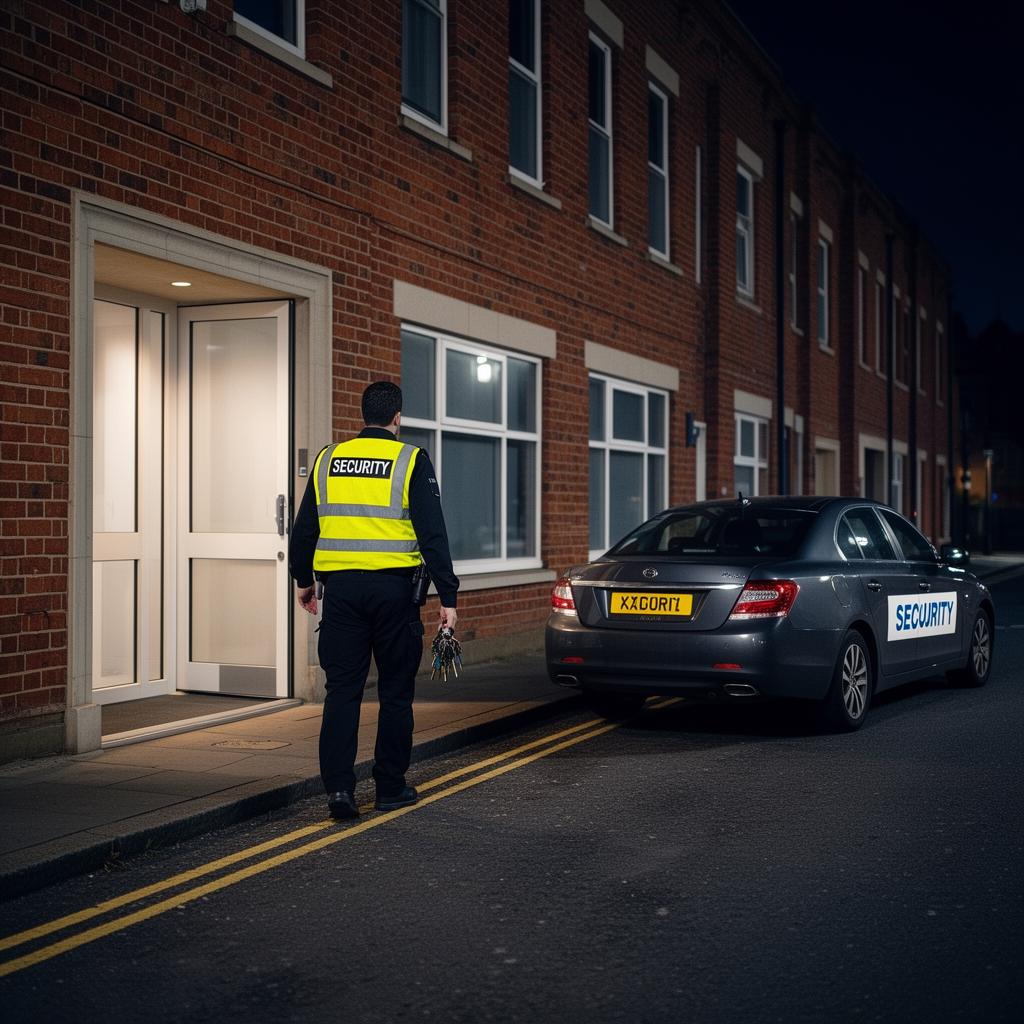
2. Why DIY Keyholding Usually Fails
Asking a manager or director to be the named keyholder feels like the cheapest option. In practice it creates real problems:
- •Lone staff arriving at potentially active break-ins without training or PPE
- •Slow or no response when the keyholder is on holiday, ill or away from their phone
- •Health and safety duty-of-care exposure for the employer
- •No structured reporting to satisfy insurers after an incident
- •Burnout — rotating internal keyholders rarely lasts more than 6–12 months
For a deeper look at how this goes wrong in practice, see our breakdown of the 5 key holding mistakes putting businesses at risk.
3. UK Standards: BS 7984, BS 7858 and SIA Licensing
Three frameworks define a credible UK key holding company:
- •BS 7984-1:2016 — Code of practice for keyholding and response services. Covers key receipt, storage, handling, attendance and reporting.
- •BS 7858 — The standard for screening security staff in environments of trust, including 5-year background checks.
- •SIA front line licence — Mandatory for any officer carrying out licensable security activity, including alarm response and door supervision.
Bonus credentials worth looking for: SIA Approved Contractor Scheme, ISO 9001, NSI or SSAIB certification, and Safe Contractor / CHAS. Delta Force Group's full credentials are listed on the accreditations page.
4. How a Professional Key Holding Company Stores Keys
Good key storage is less about the cabinet and more about the process around it. Best practice in the UK includes:
- •Keys received under signature with chain-of-custody record
- •Anonymous tagging — never the site address on the tag
- •Locked and access-controlled key cabinets in a monitored control room
- •CCTV coverage of the cabinet and key handling area
- •Sign-out and sign-in logs for every key movement
- •Keys returned to the cabinet at end of every shift — never stored in vehicles overnight
- •Quarterly key audit and reconciliation

5. Key Holding Service Costs in the UK (2026)
UK pricing in 2026 generally follows three tiers:
| Component | Typical UK Range | What Drives It |
|---|---|---|
| Key storage and standby | £8–£25 / site / month | Number of sites, response SLA, region |
| Alarm response call-out | £35–£75 per attendance | Distance, time of day, dwell time |
| Lock and unlock service | £10–£20 per event | Daily vs ad-hoc, weekend uplift |
| Mobile patrol bundled | +£15–£35 per visit | Number of visits, route density |
Always insist on transparent unit pricing. Be wary of providers that quote a single low headline figure — hidden uplifts on call-outs, mileage and weekend response are the most common cause of bill shock.
6. Response SLAs: What's Realistic
UK key holding response times typically fall within these bands:
- •Urban sites: 20–30 minutes from instruction to arrival
- •Suburban sites: 30–45 minutes
- •Rural / remote sites: 45–90 minutes — confirm coverage carefully
Delta Force Group operates a 20-minute target across covered postcodes. You can confirm your area on the postcode coverage map.
7. Ten Questions to Ask Before Signing
- 1Are you SIA Approved Contractor Scheme registered?
- 2Do you operate to BS 7984-1 and screen staff to BS 7858?
- 3Where exactly are my keys stored and who has access?
- 4What is your response SLA in my postcode, in writing?
- 5How will I be charged for call-outs, mileage and weekends?
- 6What proof of attendance do I receive after each visit?
- 7Do you provide photographic evidence in incident reports?
- 8How do you escalate to my named contacts and emergency services?
- 9Can you bundle keyholding with mobile patrols and alarm response?
- 10What happens at contract end — how are my keys returned?
8. Sectors and Use Cases
Where key holding delivers the strongest ROI in the UK:
- •Multi-site retail: Standardised out-of-hours response across the estate
- •Healthcare and clinics: Reliable attendance without disturbing clinical staff
- •Schools and academies: Holiday cover, contractor access and alarm response
- •Industrial and logistics: High-value stock protected after shutdown
- •Vacant properties*: Combined with vacant property inspections for full cover
- •Construction sites: Lock-up, contractor access and alarm response on one contract
- •Office portfolios: Removes the on-call burden from facilities and ops teams
9. Frequently Asked Questions
What is a key holding service?
A key holding service is where a regulated security provider securely stores a duplicate set of your premises keys and uses them to attend your site on your behalf — for alarm activations, lock and unlock routines, contractor access or emergencies. It removes the need for staff or directors to attend at unsociable hours.
Is key holding a legal requirement in the UK?
Key holding is not mandatory by law, but most insurers, alarm receiving centres and police forces strongly encourage it. Without a nominated keyholder, alarm activations may be ignored, response times will be longer, and insurance claims can be challenged. Many commercial insurance policies effectively require it.
How much does a key holding service cost in the UK?
UK key holding fees typically sit between £8 and £25 per month per site for storage and standby cover, plus a per-attendance call-out fee (often £35 to £75 per visit) when officers are dispatched. Pricing depends on location, response SLA and whether services like mobile patrol or lock and unlock are bundled.
What is BS 7984 and why does it matter?
BS 7984-1:2016 is the British Standard for keyholding and response services. It defines how keys must be received, stored, handled and audited, and how response services should be planned and delivered. Choosing a BS 7984-aligned provider gives you and your insurer confidence that the service meets recognised UK best practice.
How are my keys stored and protected?
Reputable providers store keys in secure cabinets at a dedicated control room, typically with anonymous tagging (no addresses on tags), CCTV-monitored access, sign-in and sign-out logs, and BS 7858 vetted staff. Keys should never be left in patrol vehicles overnight.
Who needs a key holding company?
Any organisation with premises that are unmanned out of hours benefits from key holding — including offices, warehouses, retail units, schools, healthcare sites, vacant properties, construction sites, leisure venues and multi-site portfolios where head office staff are far from the locations.
How quickly will a keyholder attend my site?
Industry standard response times sit between 20 and 45 minutes from instruction, depending on time of day and location. Urban sites typically see 20 to 30 minute response, while rural sites may take longer. Always ask a provider for their SLA in writing — Delta Force Group operates a 20-minute target across covered postcodes.
What's the difference between a key holding company and a self-managed keyholder?
A self-managed keyholder is a member of staff or director who is named to the alarm receiving centre. A professional key holding company replaces this with SIA-licensed responders, removing personal risk, fatigue and availability gaps, and providing structured reporting and insurance-grade evidence.
Make the Right Key Holding Decision
Key holding is an insurance policy that you only notice when it fails — so the cost of choosing the wrong provider is always higher than the cost of choosing well. Use the framework above when you tender your next contract, and confirm Delta Force Group covers your area in seconds.